Fenway Park
Fenway Park
District / Neighborhood: Fenway-Kenmore
Type: Baseball Stadium
Era: 1986
Status: Home of the Boston Red Sox — and the worst night in Boston sports history
Description
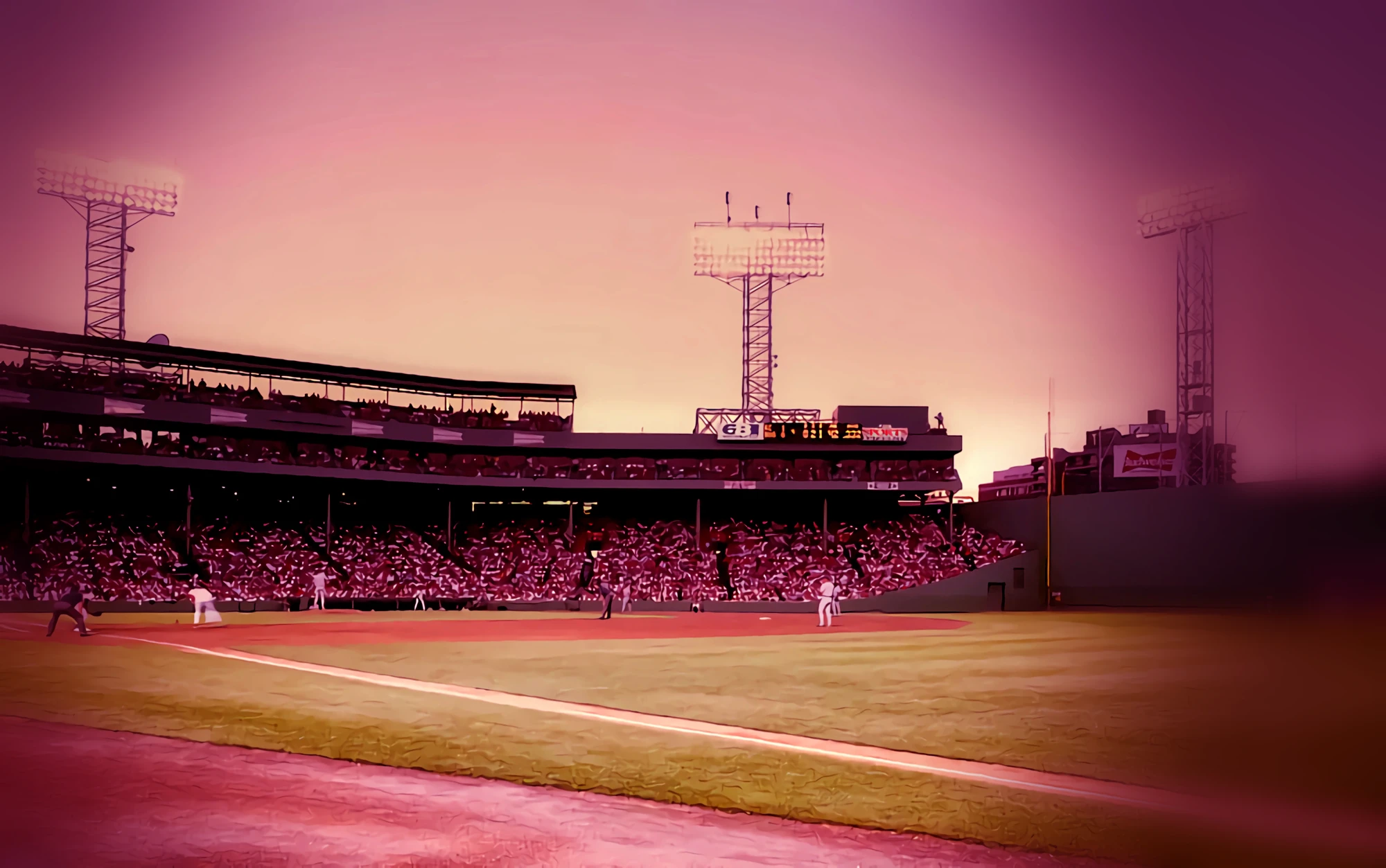
Home of the Boston Red Sox since 1912. One of the oldest and most storied ballparks in America. In the 1980s, the park saw physical renovations — first luxury boxes in 1982, Yaz Day (Carl Yastrzemski's farewell, 1983), Roger Clemens striking out 20 Seattle Mariners in a single game (1986).
And then October 25, 1986.
History
Opened 1912. Built on a former wetland in the Fenway-Kenmore neighborhood — the Back Bay Fens, or the "Back Fenn" as older locals sometimes call it. The park has seen decades of near-misses, legendary players, and heartbreak that has become almost mythological in this city.
The 1986 World Series was supposed to be the year. The Red Sox were one strike away from ending sixty-seven years of drought.
Bill Buckner let the ball roll through his legs.
Key Features
- The Green Monster (37-foot left field wall) — the most iconic feature of the park. Painted green. Manual scoreboard. Something Boston.
- Pesky's Pole — the right field foul pole, famously close
- Manual scoreboard — operated by hand from inside the wall
- The Fens — the wetland parkland beyond the outfield, remnant of the original marshland
Key NPCs
(Plain text only — no wikilinks per graph hierarchy rules)
| Name | Role |
|---|---|
| Harold Whitmore | Red Sox minority owner |
GM Notes
The site of Fenway Park was once the Back Fenn — a liminal wetland where the Material Plane pressed thin against the Feywild. When the park was built in 1912, its ownership allowed the Fey to operate within the park's boundaries — an informal permission. In 1926, this became a formal compact with both the Winter Court and the Summer Court: sixty years of near-miss seasons, grief harvested, magic channeled. In the sixtieth year (1986), Boston was meant to win. The debt would be paid.
The compact was deliberately broken. The betrayal was arranged and paid for. Bill Buckner did not fumble on his own.
In Fey culture, this is a capital crime.
The concentrated grief of forty-plus years — focused and amplified in one night — cracked the veil. The Grief-Eater slipped through that crack.
See: The Fenway Pact, The Cabal
Not paint and tin. The Green Monster is the housing of a Summer Court titan — a creature of joy that slept beneath the left-field wall for sixty years, waiting for its night of celebration. It was denied that night. It is not sleeping now. It is waking in anguish, and the Summer Court's suppressed celebratory energy has nowhere to go.
The Green Monster is not a villain. It is suffering. The party's options:
- Destroy it (satisfies Winter Court; enrages Summer further)
- Find a way to give it the victory it was promised — symbolically, magically, or through ritual acknowledgment — to pacify Summer Court
- Neither approach fully resolves both Courts; negotiation with each will still be required
Its emergence is the campaign's central physical crisis — Chapter 4 or earlier.
Minority owner of the Red Sox. Architect of the 1986 betrayal. He arranged and funded the deliberate breaking of the compact, knowing full well what he was doing. He is a senior member of The Cabal.
The veil at Fenway remains the thinnest point in Boston. The park is the most accessible location for Fey Court contact in either direction. Both Courts are watching it.